PP Fiber for Concrete: Ranking Micro, Macro, and Twisted Variants
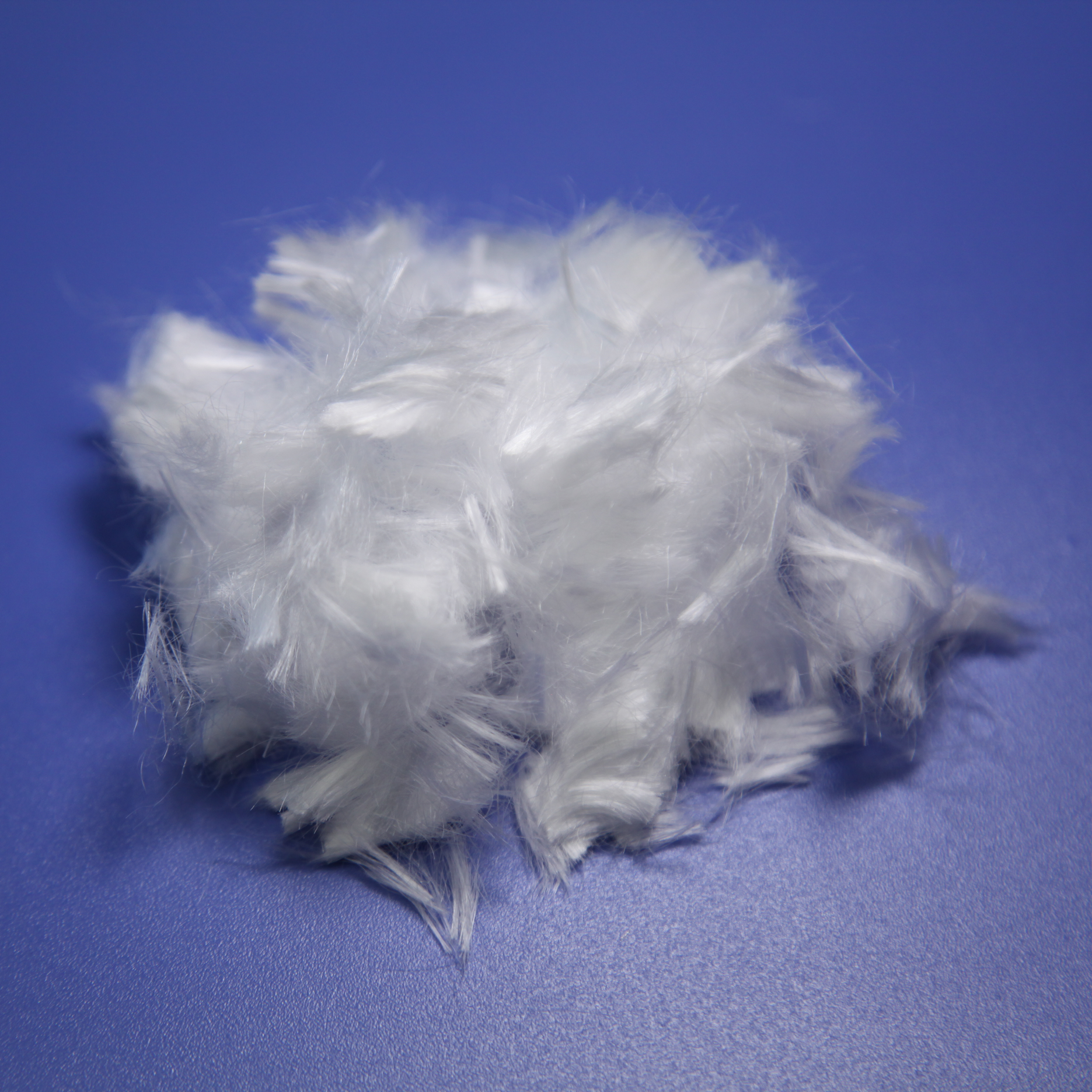
PP micro fiber is the first variant to evaluate when plastic and early-age crack control govern the specification.
PP fiber for concrete is a family, not a single specification. Micro, macro, and twisted polypropylene fibers differ in filament size, geometry, and the stage of cracking they are designed to influence. That difference is what makes a ranked selection useful at the evaluation stage: the buyer is not choosing a generic additive, but a fiber geometry that has to match a cracking mechanism, a mixing process, and an inspection plan.
The short answer: a ranking by application fit
Ranked by application fit, the order below is the sequence a buyer should use when the project has not yet fixed a fiber type. It is a decision order, not a claim that one polymer geometry is inherently superior.
Rank 1 - PP micro fiber: first choice for dispersion-sensitive crack control in plastic and early-age concrete.
Rank 2 - PP macro fiber: first choice for hardened-state toughness where post-crack bridging is required.
Rank 3 - PP twisted fiber: first choice for anchorage-heavy elements where fiber pull-out governs the design.
The ranking is not a scorecard. A micro fiber is not a low-grade macro fiber, and a twisted fiber is not automatically better than a macro fiber. Each variant answers a different question, and the sections below explain the criteria, the applications, and the specifications that should be verified before an order is placed.
What PP micro, macro, and twisted fiber actually are
Polypropylene is a synthetic polymer. In concrete reinforcement it is spun or drawn into fibers and supplied in three commercial forms. The definitions below are functional, because the same words are sometimes used loosely in datasheets.
PP micro fiber
Micro fibers are the finest of the three families. They are supplied as fine filaments, normally at a high filament count per kilogram, and they are intended to intercept cracks while the concrete is still plastic or very young. The reinforcement effect depends on many filaments being distributed through the mix at close spacing. Dispersion is therefore the critical variable: a micro fiber that balls up or nests in the mixer cannot reinforce the zone it never reached.
PP macro fiber
Macro fibers are larger, discrete polypropylene fibers with enough cross-section and length to bridge a crack after the concrete has hardened. They are specified where the design wants residual strength or toughness, not only early-age crack control. Anchorage comes from the fiber geometry and its bond with the matrix: the fiber must be long enough and shaped well enough to carry load across an opening crack instead of pulling out immediately.
PP twisted fiber
Twisted fibers are a shaped variant. The fiber is deformed along its length so that the matrix grips it mechanically. The design intent is anchorage. A straight fiber relies more on adhesion and friction, while a twisted fiber adds a geometric interlock that resists pull-out. That makes twisted fiber relevant in elements where the fiber is expected to carry load close to its tensile capacity and where pull-out failure would waste that capacity.
Where PP fiber sits in concrete today
One published forecast from Fortune Business Insights projects the global polypropylene fiber market for construction to grow at a compound annual growth rate of 6.4% from 2026 to 2034. That is a forecast, not an observed shipment figure, and it does not tell a buyer which variant to choose. What it does support is the practical point that PP fiber is a category with several product families, not a single commodity. The selection decision therefore has to be made at variant level, using the cracking mechanism and the project conditions rather than the category label.
Why the variant choice changes crack control
The three variants are not interchangeable because cracking in concrete happens in stages, and the stages do not respond to the same fiber.
Plastic-stage and early-age cracking
Plastic-stage cracking occurs before the concrete has developed significant tensile strength. It is driven by rapid moisture loss, settlement, and restraint from formwork, reinforcement, or a stiff base. A fine fiber network can intercept these cracks while they are still microcracks. This is the stage where micro fiber has its clearest functional advantage.
Hardened-stage cracking
Hardened-stage cracking occurs under service loads, restrained shrinkage, or thermal movement. By this point the matrix has already cracked, and the fiber must bridge a wider opening. That requires a fiber with enough size, length, and anchorage to carry load across the crack. Macro and twisted fibers are designed for this stage; micro fiber is not.
Dispersion and the hydrophobic surface
Polypropylene is hydrophobic, so it does not wet out like a mineral filler. Suppliers address this through product finishing, packaging, and mixing instructions. The buyer should ask what evidence exists that the fiber disperses without balling, and should write the requirement into the purchase specification. Working conditions for fiber-reinforced concrete commonly include alkali resistance, high dispersion uniformity, and no agglomeration during mixing; those are acceptance criteria, not marketing language.
Chemical stability and durability logic
Polypropylene is chemically stable in the alkaline pore solution of cementitious concrete and does not absorb water. That is a material property, not a performance guarantee. Cracks create paths for water and aggressive ions, so reducing crack width at the plastic stage and bridging cracks at the hardened stage both support durability. The size of that effect depends on the crack width achieved, the exposure condition, and the rest of the mix design. Fiber is one variable in a durability strategy, not a replacement for cover, compaction, and curing.
How this ranking was built
Four criteria decide the order.
- Stage of crack control. Does the variant act before or after the matrix hardens?
- Structural contribution. Is the fiber intended only to control shrinkage cracking, or to contribute residual strength after cracking?
- Anchorage demand. Does the element need the fiber to resist pull-out and carry load near its tensile capacity?
- Dispersion sensitivity. How easily can the fiber be distributed uniformly in the actual mix, at the actual dosage, with the available mixing equipment?
Two rules keep the ranking honest. First, no variant receives credit for an unpublished number. If a supplier has not declared a diameter, length, tensile strength, density, or elastic modulus for the exact product, the correct treatment is not disclosed, not an assumed value. Second, the ranking is by application fit, not by market share or by a claim that one polymer geometry is inherently superior.
Rank 1: PP micro fiber for dispersion-sensitive crack control
Why it ranks first
Micro fiber addresses the earliest and most widespread cracking risk in concrete: plastic shrinkage and early-age cracking in restrained sections. Its filament network is distributed through the mix at close spacing, which is the mechanism that matters before the matrix can carry tensile stress. For a buyer evaluating crack control, this is the variant with the broadest relevance across slabs, overlays, repair mortars, and thin concrete elements.
Where it fits
- Slabs and toppings with large surface area and fast evaporation.
- Overlays and repairs where the bonded layer is thin and early-age cracking would compromise the repair.
- Elements with dense reinforcement, where a larger fiber may be harder to place uniformly.
- Thin, high-surface-area elements such as track-bed grout layers in high-speed rail work, where the project specifies a synthetic fiber for early-age crack control.
- Architectural or precast surfaces where a fine crack pattern is unacceptable.
What to verify
Ask for the declared fiber diameter and length, tensile strength, density, and recommended dosage. Ask how the fiber is surface-finished or packaged to control dispersion, and what mixing time and charging sequence the supplier recommends. Confirm that the dosage used in the trial mix is the dosage on which the supplier data is based. If the supplier cannot state the basis of the dosage, the data should not be used for a design decision.
Boundary
Micro fiber is not a structural replacement. It contributes little post-crack capacity compared with a macro fiber, and it should not be presented as a substitute for designed reinforcement. Its value is in the earlier stage of the concrete life.
Rank 2: PP macro fiber for structural toughness
Why it ranks second
Macro fiber does a different job: it bridges cracks after the concrete has hardened and provides residual strength. On a pure crack-control ranking it sits behind micro fiber because it does not address the earliest cracking stage as efficiently. On a toughness ranking it moves ahead, because a micro fiber cannot carry load across a developed crack.
Where it fits
- Industrial floors and slabs on grade where the design uses fiber to provide post-crack capacity.
- Tunnel linings and cast-in-place linings where toughness and crack-width control are specified.
- Bridge decks and link slabs where a synthetic fiber is permitted by the design.
- Hydraulic structures such as channels, aprons, and spillway elements exposed to restrained movement.
- Any element where the design calls for residual flexural strength rather than only shrinkage crack control.
What to verify
Request the equivalent diameter and length, tensile strength, density, elastic modulus, and the recommended dosage. Ask for residual-strength evidence from a recognized flexural toughness test, such as ASTM C1609 or ASTM C1550, and confirm that the test was run on concrete comparable to the project mix. Check that the declared fiber geometry matches the sample and the packaging.
Boundary
Polypropylene has a lower elastic modulus than steel, so a PP macro fiber and a steel fiber are not interchangeable at equal dosage by default. If the design was based on steel fiber, substituting PP fiber requires a new design check, not a straight swap.
Rank 3: PP twisted fiber for anchorage-heavy reinforcement
Why it ranks third, and when it moves up
Twisted fiber is the most specialized of the three. It ranks third on breadth of application, but it can outrank both other variants in elements where anchorage governs: precast tunnel segments, segmental linings, high-speed rail precast elements, and heavily restrained sections where the fiber must develop its strength over a short embedment length.
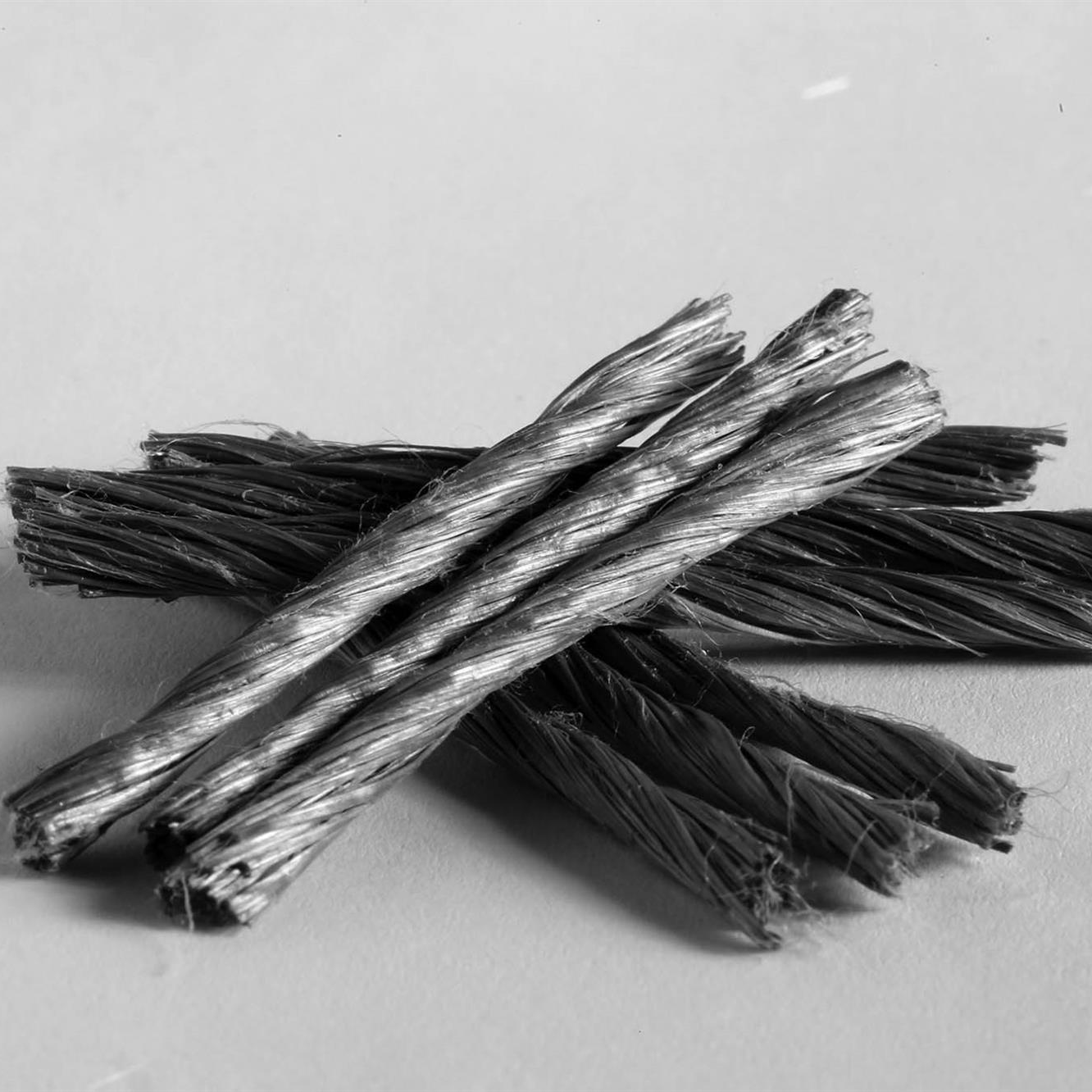
PP twisted fiber adds a mechanical interlock intended to resist pull-out in precast and segmental concrete.
The mechanism
The twisted geometry creates a mechanical interlock with the cement matrix. That interlock resists pull-out and allows the fiber to carry load closer to its tensile capacity. A straight macro fiber can also carry load, but its performance depends more on bond and friction; the twisted shape adds a geometric component.
Where it fits
- Precast tunnel segments and segmental tunnel linings.
- High-speed rail precast elements and anchorage-critical connections.
- Elements with high restraint and a design requirement for tight crack control.
- Applications where the specified fiber must demonstrate pull-out resistance rather than only dispersion.
What to verify
Confirm that the geometry is consistent from batch to batch, not only in the sample. Ask for tensile strength, equivalent diameter and length, recommended dosage, and mixing guidance, because shaped fibers can interact with each other in the mixer if the charging sequence is wrong. Ask for residual-strength or pull-out evidence appropriate to the design method.
Boundary
Twisted fiber is not automatically the strongest choice. Its advantage appears where anchorage is the limiting factor; where the design is governed by dispersion or by early-age cracking, micro fiber remains the first variant to evaluate.
Side-by-side comparison
| Rank | Variant | Stage of crack control | Main contribution | Anchorage mechanism | Dispersion sensitivity | Evaluate first for |
|---|---|---|---|---|---|---|
| 1 | PP micro fiber | Plastic and early age | Fine filament network that controls cracking before the matrix hardens | Bond and close filament spacing | High; surface finishing and mixing control are critical | Slabs, overlays, repairs, thin elements, track-bed grout |
| 2 | PP macro fiber | Hardened and post-crack | Bridges cracks and provides residual strength and toughness | Geometry and bond over a longer embedment length | Moderate; dosage and mixing sequence matter | Industrial floors, tunnel linings, bridge decks, hydraulic structures |
| 3 | PP twisted fiber | Hardened and post-crack | Carries load closer to tensile capacity where pull-out governs | Mechanical interlock from the twisted shape | Moderate to high; batch consistency of geometry matters | Precast tunnel segments, rail precast elements, anchorage-critical sections |
The table is a selection aid, not a specification. Dosage, geometry, and acceptance values still have to come from the supplier declared data and the project design method.
Matching the variant to high-speed rail, tunnels, bridges, nuclear, and hydraulic work
The application map below is a starting order for evaluation, not a specification. Each project still needs its own dosage, test, and acceptance criteria.
| Application | First variant to evaluate | Reason | Verification focus |
|---|---|---|---|
| High-speed rail | Micro for thin grout and track-bed elements; twisted for precast elements | Early-age crack control in thin sections; anchorage in precast | Dispersion, dosage basis, residual-strength evidence for precast |
| Tunnels | Macro for cast-in-place linings; twisted for segments | Toughness in linings; pull-out resistance in segments | Flexural toughness test, geometry consistency, batch records |
| Bridges | Micro for deck overlays; macro where toughness is specified | Early-age cracking in overlays; post-crack capacity in decks | Test method, mix compatibility, dosage |
| Nuclear power plants | Micro | Crack control and consistent dispersion in low-permeability mixes | Project-specific qualification, inspection records, elevated-temperature requirements where applicable |
| Hydraulic structures | Macro, with micro for surface crack control | Toughness under restrained movement; surface crack control | Dosage, residual strength, exposure conditions |
High-speed rail
In high-speed rail work, the concrete mix is not one material. Thin grout and track-bed layers, precast elements, and cast-in-place structures place different demands on a fiber. Micro fiber is the first variant to evaluate where early-age crack control and dispersion in a thin section are the priorities. Twisted or macro fiber is the first variant to evaluate in precast elements where the design requires post-crack capacity or anchorage. The project specification, not the application label, decides which case applies.
Tunnels
In tunnel work, cast-in-place linings and precast segments are different fiber problems. Linings are usually evaluated for toughness and crack-width control, which points to macro fiber. Segments are evaluated for anchorage and consistent geometry, which points to twisted fiber. A single tunnel project can therefore use more than one PP variant, and the buyer should not assume that one fiber specification covers both elements.
Bridges, nuclear, and hydraulic structures
Bridge decks and link slabs follow the same logic as floors and linings: micro fiber for early-age cracking, macro fiber where the design requires toughness. Nuclear power plant concrete places a premium on crack control, low-permeability mixes, and consistent dispersion; micro fiber is the first variant to evaluate, while project-specific requirements, including elevated-temperature or fire requirements where they apply, must be checked separately. Hydraulic structures usually favor macro fiber where toughness is specified, with micro fiber considered for surface crack control.
A five-step evaluation sequence
- Define the cracking mechanism. Decide whether the project is mainly controlling plastic and early-age cracking, hardened-state cracking, or both. This single decision eliminates most of the wrong comparisons.
- Shortlist one variant. Use the ranking and the application map to choose the variant to evaluate first. Do not shortlist three variants for one mechanism just to obtain three quotes.
- Request declared data. Ask for diameter or equivalent diameter, length, tensile strength, density, elastic modulus, dosage basis, surface treatment, and test method. Record what is declared and what is not disclosed.
- Run a trial mix with project materials. Dispersion, workability, and residual strength depend on the actual cement, aggregate, admixture, and mixer. A supplier datasheet is a starting point, not a trial result.
- Lock the acceptance criteria. Agree the test method, sampling frequency, inspection records, packaging, and delivery schedule before the order is placed.
Specification checklist before comparing quotes
Price per kilogram is the last comparison, not the first. The checklist below covers the inputs that change what a kilogram of fiber actually delivers.
- Variant identity and base polymer. Confirm that the product is polypropylene and that the variant is stated as micro, macro, or twisted.
- Declared geometry. Diameter or equivalent diameter and length, with the method used to measure them.
- Tensile strength and test method. A number without a method is not comparable across suppliers.
- Density. Needed for dosage conversion and for checking consistency between batches.
- Elastic modulus. Relevant where the design uses the fiber for residual strength.
- Surface treatment and dispersion control. Ask what is applied, why, and how it is checked in production.
- Recommended dosage range and its basis. Confirm whether the recommendation comes from lab tests, field trials, or both.
- Residual-strength or toughness evidence. Ask for the test standard and the concrete mix used.
- Packaging and charging method. Water-soluble bags, batch size, and mixing time all affect dispersion.
- Inspection and traceability. In-line inspection, pre-shipment inspection, and batch records should be available for the exact grade ordered.
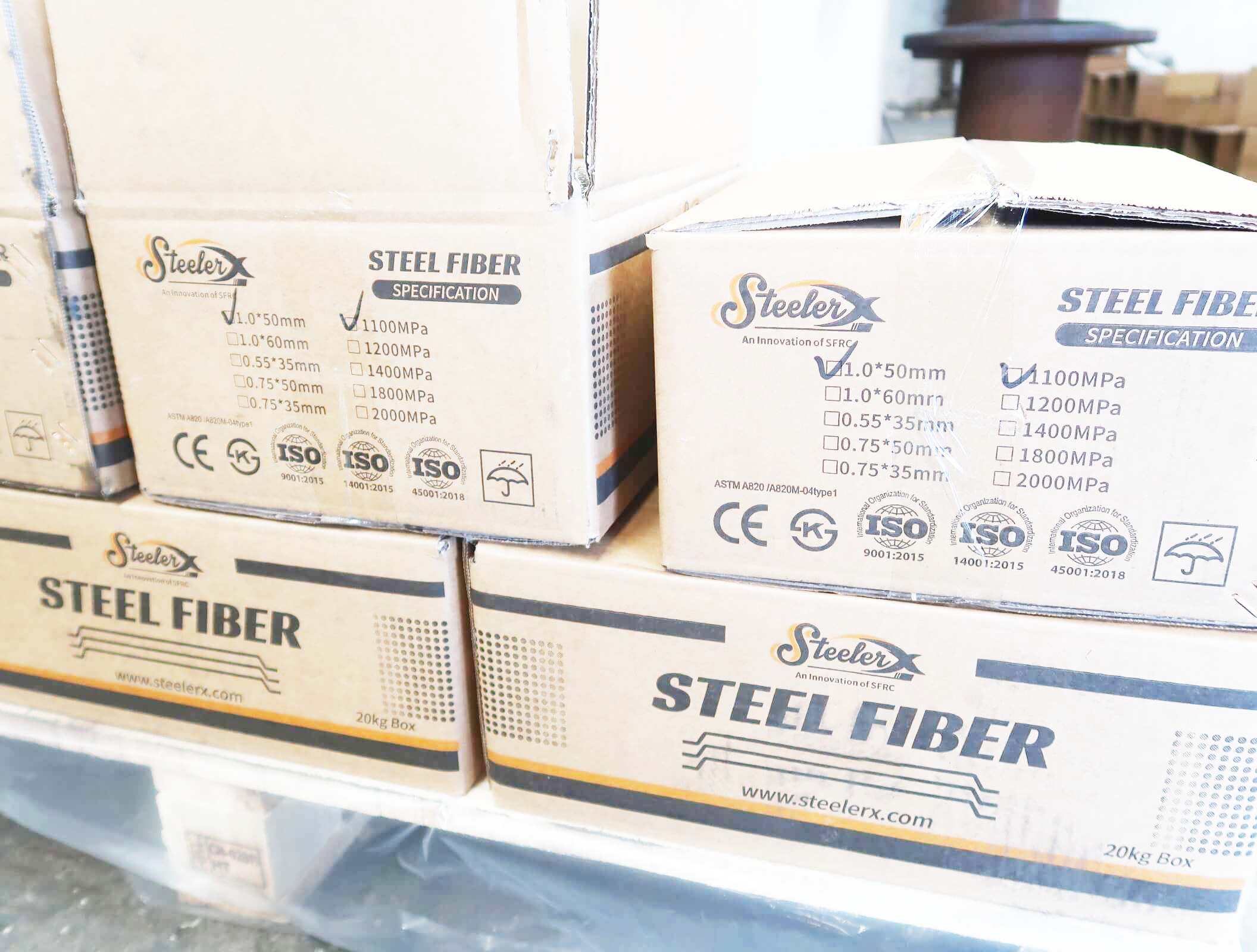
Packaging and charging method belong in the specification because they affect dispersion and site handling.
Where Tianjin TingCo Tech Co., Ltd. fits
Tianjin TingCo Tech Co., Ltd. is a Tianjin-based sales and R&D company founded in 2014, operating with its manufacturing base, Hebei Tingco New Material Co., Ltd. The company supplies steel fibers and PP macro, micro, and twisted fibers for concrete reinforcement, and exports about 70% of its output to the EU, Africa, South East Asia, and the Middle East.
The manufacturing facts relevant to a PP fiber evaluation are straightforward. The factory covers 6,000 m², employs 50 people, and has an annual output of 24,000 tons, with a monthly production capacity of 2,000 tons. The typical production lead time is 10-15 days, the minimum order quantity for trial project orders is 24 tons, and quality control follows in-line inspection and pre-shipment inspection. OEM and ODM work, including custom logo and design, is available on request. The factory is ISO 9001 certified.
Two scope points matter for buyers comparing fiber families. First, the company operates its own steel fiber reinforced concrete testing laboratory for beam bending, compression, and toughness tests; for a PP fiber evaluation, confirm which tests are performed on the synthetic range and request the corresponding data. Second, the CE certificate held for steel fibers under EN 14889-1:2006 is a steel-fiber declaration; it does not by itself certify a PP product, so request the separate declaration for the synthetic range.
Limitations of this ranking
- It is not a design method. The ranking does not calculate dosage, residual strength, or crack width; those come from the project design and testing.
- It cannot replace project-specific trials. Dispersion and toughness depend on the actual mix, mixer, and placing method.
- It does not rank suppliers. The variants are ranked by application fit, not by brand, price, or market share.
- It does not make PP fiber a substitute for steel reinforcement. Structural design assumptions must match the fiber actually used.
- It does not resolve fire or elevated-temperature requirements. Those are project-specific and should be checked separately.
Frequently asked questions
Which PP fiber should I use for crack control in concrete?
For plastic and early-age cracking, evaluate PP micro fiber first, because its fine filament network intercepts cracks before the concrete hardens. For cracks that develop after hardening and need post-crack bridging, evaluate PP macro fiber. For anchorage-critical elements, evaluate PP twisted fiber. The correct choice depends on the cracking stage the design is addressing, not on a single universal label.
What is the difference between PP macro fiber and PP twisted fiber?
Both are used after the concrete hardens, but they solve different problems. PP macro fiber provides post-crack bridging and toughness through its size, length, and bond. PP twisted fiber adds a deformed geometry that mechanically interlocks with the matrix to resist pull-out. Macro fiber is the broader choice for floors and linings; twisted fiber is the specialist choice where anchorage governs.
Is PP fiber suitable for tunnel and high-speed rail concrete?
PP fiber can be evaluated for both, but the variant and the acceptance evidence differ. In tunnel linings, macro fiber is normally evaluated for toughness and crack-width control, while twisted fiber is evaluated for precast segments where anchorage matters. In high-speed rail work, micro fiber is evaluated for thin elements and early-age crack control, and twisted or macro fiber for precast elements where the design requires post-crack capacity. Each application still needs project-specific dosage and test evidence.
What should I check in a PP fiber datasheet?
Check the base polymer and variant, the declared diameter or equivalent diameter and length, tensile strength and test method, density, elastic modulus, recommended dosage, surface treatment or dispersion guidance, and residual-strength evidence where relevant. Confirm that the datasheet applies to the exact product and grade being quoted, and that the values are declared rather than described.
What are TingCo MOQ and lead time for PP fiber orders?
Tianjin TingCo Tech Co., Ltd. lists a minimum order quantity of 24 tons for trial project orders, a typical production lead time of 10-15 days, and a monthly production capacity of 2,000 tons, with in-line and pre-shipment inspection. For a specific PP variant, confirm the current specification, packaging, and delivery schedule with the technical team. To request a sample, a quotation, or the current PP fiber datasheet, contact the team through the company website.
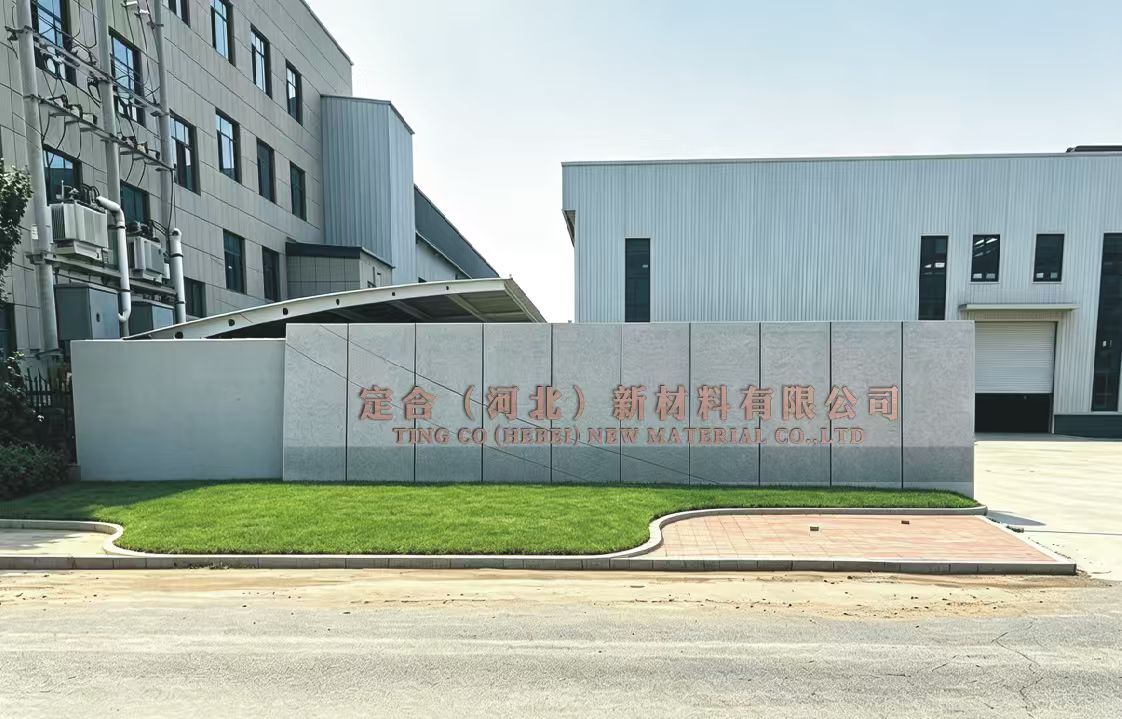
Tianjin TingCo Tech Co., Ltd. supplies steel and PP fibers from a 6,000 m² manufacturing operation with in-line and pre-shipment inspection.
If you are evaluating PP fiber for a project, the practical next step is to request the declared specification and inspection records for the exact grade, then run a trial mix with your own materials. Tianjin TingCo Tech Co., Ltd. can provide the current PP fiber datasheet, packaging options, and a sample or quotation through the company website.
Conclusion
PP fiber for concrete rewards a staged decision. Rank micro first for dispersion-sensitive crack control, macro first for hardened-state toughness, and twisted first for anchorage-heavy precast and segmental work. The ranking is only as good as the specification behind it: declared geometry, tensile strength, density, modulus, dosage, dispersion control, and inspection records. Buyers who compare those inputs, rather than price per kilogram alone, are the ones who get a fiber that matches the cracking mechanism they are actually trying to control.
Company brochure (PDF): TINGCO company profile and project introduction.
Have Questions or Need More Details?
Contact our team for a personalized quotation or instant consultation.
Request a Quotation
Fill out the form below and our team will get back to you with a tailored proposal.
WhatsApp Direct Chat
Prefer to chat in real-time? Message us on WhatsApp for instant assistance & quick answers.
- Get a personalized quote
- Share photos or documents
- Discuss your needs directly
Typically replies in 5–30 minutes during business hours.