
Loose or Glued Steel Fiber? Fit the Supply Form to the Mix
Loose and glued steel fiber can put the same wire, the same cut length and the same tensile grade into the same concrete mix. What separates them is how the fiber reaches the mixer: as individual filaments weighed into the batch, or as bundles held together by a water-soluble adhesive and charged in whole. That difference shapes the feed step, the mixing time, the dust, the balling risk and how fast a production line can hold its cycle.
Short answer: site-batched industrial floors, and any mix where the dosage moves from pour to pour, are usually easier to run on loose fiber, because the fiber can be weighed to any value and fed through the charging route already on site. Precast yards casting tunnel segments on a fixed cycle, where whole-bag charging shortens the feed step, usually find glued fiber the closer fit. Neither form is automatically superior; the mixer, the dose and the crew decide.
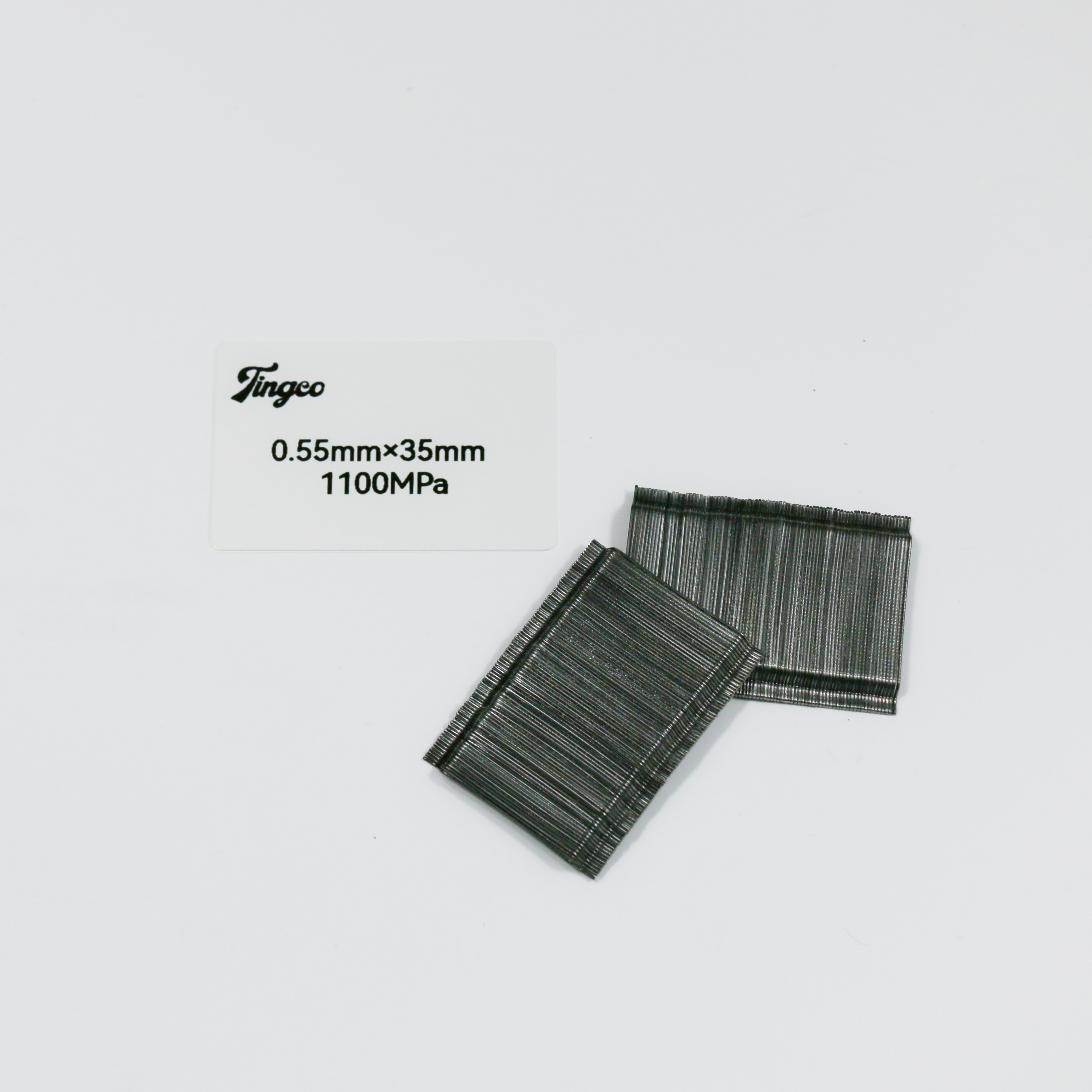
Glued bundles hold their shape through storage and the feed point, then separate under water and agitation.
What Loose and Glued Supply Actually Change
Both forms are hooked-end steel fiber for concrete reinforcement. In loose supply, each fiber sits separate in the bag or carton, and the buyer weighs fiber per batch before feeding it into the mixer. In glued supply, fibers are bonded into bundles with a water-soluble adhesive so they stay together through storage, transport and charging, then open when they meet water and mixing energy.
The supply form does not change the wire diameter, the cut length or the tensile grade of the individual fiber; those are fixed by the product specification. TingCo's steel fiber range is stated at 0.55–0.90 mm in diameter and 35–60 mm in length, with tensile strength from 1,200 MPa to 2,500 MPa, and 60 mm lengths are available. What the supply form changes is the handling chain around those values: metering, charging, dispersion, airborne filaments, bag handling and the mixing energy required to reach a uniform distribution.
That is why the comparison belongs against a specific mix design rather than in the abstract. A glued bundle is not a stronger fiber than a loose filament of the same specification. It is the same specification delivered in a form that suits a particular charging method, and the cost of choosing badly shows up as extra mixing time, rejected batches or a slower pour rate, not as a difference in the catalog number.
The same logic extends across the wider steel fiber family. Where a project uses micro steel fiber, brass-coated micro steel fiber or stainless steel fiber rather than a standard hooked-end grade, the loose-versus-glued question still applies, because it is a question about how the fiber enters the mixer rather than about which fiber family was specified.
Why the Decision Is Made at the Mixer, Not on the Datasheet
A datasheet describes the fiber. The batching plant decides whether that fiber can be used economically. Six variables usually settle the choice before price is discussed.
Dosage range. TingCo's published dosing guidance for steel fiber is 20–40 kg/m³ for shotcrete, 15–30 kg/m³ for industrial floors and 10–30 kg/m³ for precast elements. A plant that runs one fixed dose all week and a plant that switches between a floor mix and a segment mix have different metering needs, and only the second plant gains much from fiber that arrives pre-portioned.
Mixer type and feed point. A weigh hopper or a conveyor with a controlled gate favors loose fiber, because the fiber can be released at a steady rate. A plant that charges by bag through a single opening has an easier time with glued bundles, especially where water-soluble packaging is used.
Batch size and cycle time. Short, repeated batches in a precast yard reward a fast feed step. Large floor pours reward flexibility in dosage and the ability to hold fiber inventory in bulk.
Crew and shift pattern. Loose fiber requires someone to weigh and spread it evenly; glued fiber requires someone to count bags and place them correctly in the charge sequence. Both are skills, and the one your crew already has is the cheaper one.
Haul distance. For long transport distances with mixer trucks, TingCo's guidance is to pre-mix at the batching plant rather than dose fiber into the drum on site. That pushes the decision back to the plant, where metering accuracy matters more than bag convenience.
Workability and admixture response. Both forms change slump and workability, and both may require an adjustment to superplasticizer dosage after the trial batch. The supply form affects how evenly that change appears from batch to batch.
Industry Background: Where the Fiber Volume Actually Goes
Commercial research published by Fortune Business Insights for 2026 reports that the industrial floors application segment accounted for 37.28% of the steel fiber market, and that hooked-end steel fibers held the leading type segment share at 58.89%. Those figures describe the market as a whole, not any single supplier, but they explain why supply-form decisions are usually made under production pressure: the largest application is a high-volume, fast-cycle flooring business, and the leading fiber type is the hooked-end geometry that both loose and glued supply deliver.
The same research house projects the global steel fiber market to reach approximately USD 2.87 billion by 2026. Different research houses publish materially different totals depending on whether synthetic fibers are included, so the figure is best read as a scale indicator rather than a precise forecast.
The case for steel fiber over traditional mesh reinforcement is already established in flooring applications. TingCo's comparison material states that steel-fiber-reinforced flooring offers 30%–40% lower cost than wire mesh reinforced flooring, reduces construction time by 50%, and has a longer expected lifespan, with fewer post-construction cracks and less crack repair. Those numbers compare steel fiber against wire mesh; they are not a comparison between loose and glued supply, and they should not be read as one. They matter here only as background: once a project has chosen fiber reinforcement, the remaining question is which supply form the plant can run.
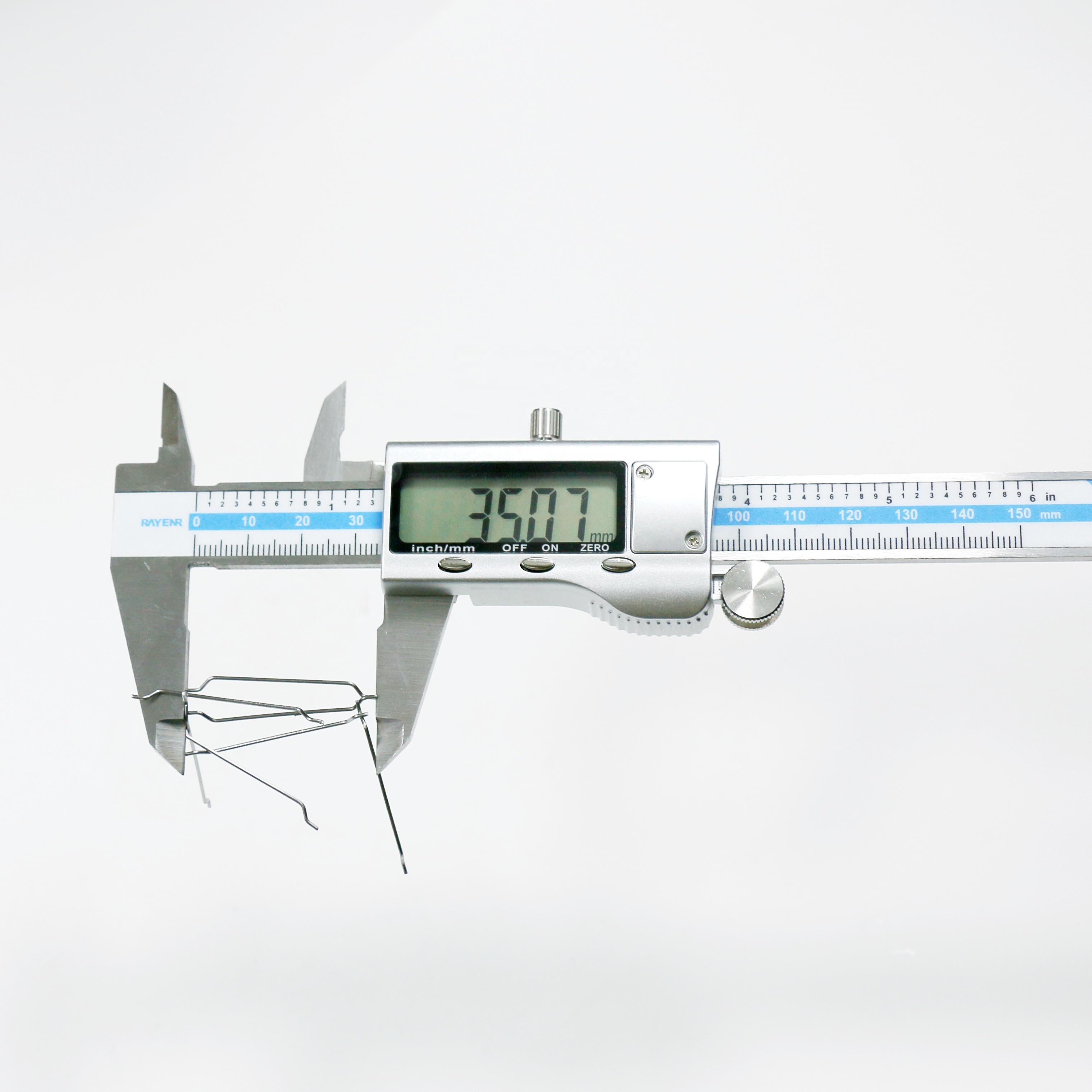
Loose fiber is weighed per batch, so the dosage can be adjusted without changing the order.
Loose vs Glued Steel Fiber: Criterion-by-Criterion Comparison
The table below compares the two supply forms on the criteria that actually change a batching decision. Values marked as dosing or mixing guidance come from TingCo's published steel fiber instructions and apply to steel fiber generally rather than to one form.
| Decision criterion | Loose steel fiber | Glued steel fiber |
|---|---|---|
| Physical state at delivery | Individual fibers in bags or cartons | Fibers bonded into bundles with a water-soluble adhesive |
| Metering | Weighed to the required dose for each batch | Charged by bag or bundle, so the dose follows the packed weight |
| Charging route | Needs an even, controlled feed; dumping a large quantity at once risks clumping | Can enter with the aggregates where water-soluble packaging is used; the bag dissolves in about five seconds |
| Non-soluble packaging | Spread evenly in batches by hand or hopper | Spread evenly in batches if the outer packaging is not water-soluble |
| Mixing time | Extend by 30–60 seconds versus plain concrete | Extend by 30–60 seconds versus plain concrete |
| Dispersion risk | Dependent on feed rate, drop height and mixing energy | Bundles open under water and agitation; still dependent on mixing energy |
| Handling and safety | Gloves and goggles needed; airborne filaments are the main exposure | Fewer loose filaments before mixing, but the same protective equipment is required at the feed point |
| Long hauls | Pre-mix at the batching plant where haul distance is long | Same requirement applies |
| Typical fit | Site-batched floors, variable dosage, weigh-hopper plants | Precast yards, fixed cycles, whole-bag charging |
| Acceptance basis | Hardened-concrete tests: EN 14651, ASTM C1609 or ASTM C1550 | Same test basis |
The row that surprises buyers most is mixing time. Glued bundles do not remove the need for extended mixing; they change what happens in the first seconds of the charge. A plant that shortens the mix because the fiber arrived glued will still see balling and uneven distribution, and the resulting batch is harder to diagnose because the feed looked correct.
Step-by-Step: Matching Supply Form to Your Mix
The following sequence follows TingCo's published dosing and mixing instructions for steel fiber and adds the supply-form checks that belong at each stage.
- Fix the dose from the mix design. Use 20–40 kg/m³ for shotcrete, 15–30 kg/m³ for industrial floors and 10–30 kg/m³ for precast elements as the working range, then confirm the final value against the structural design and the trial mix. A dose that varies between pours points toward loose supply; a dose that repeats identically points toward either form.
- Weigh the fiber. Weighing is what makes the dose auditable. Even with glued bundles, record the packed weight and the number of bags per batch so the dose can be reconstructed from the batch record.
- Choose the charging route. Water-soluble packaging bags can be fed directly into the mixer together with the aggregates and dissolve in about five seconds. Non-water-soluble packaging should be opened and the fiber spread evenly in batches, whether the fiber inside is loose or glued.
- Extend the mixing time. Add 30–60 seconds compared with plain concrete to reach uniform dispersion without clumping. This is the single most common cause of a failed trial in both supply forms.
- Check slump and workability. Measure slump after mixing and adjust the superplasticizer dose if required. Record the adjustment, because the corrected admixture level becomes part of the approved mix.
- Run a trial batch before the order. Cast specimens from the trial and test hardened properties under EN 14651 or ASTM C1609, or ASTM C1550 for a panel test. The trial is the only stage where a supply-form mismatch is still cheap to correct.
Selecting Among TingCo's Hooked-End Models
TingCo lists four hooked-end steel fiber models in this decision path: TC-07560-HNG, TC-07560-HHG, TC-05535-HNG and TC-07535-HNL. A model designation identifies the product; it does not, on its own, tell a buyer the diameter, the cut length, the tensile grade or the supply form. Those values sit on the current datasheet and the batch inspection record, and they must be confirmed model by model before a purchase order is released.
| Model | Confirm on the datasheet before ordering | Confirm in the trial batch |
|---|---|---|
| TC-07560-HNG | Diameter, cut length, tensile strength, supply form, packaging type | Feed rate without balling; slump change; residual strength result |
| TC-07560-HHG | Diameter, cut length, tensile strength, supply form, packaging type | Bundle opening under the plant's mixing energy; dispersion uniformity |
| TC-05535-HNG | Diameter, cut length, tensile strength, supply form, packaging type | Dose accuracy at the specified kg/m³; workability retention |
| TC-07535-HNL | Diameter, cut length, tensile strength, supply form, packaging type | Distribution in the actual mixer; surface finish after screeding |
A practical selection order follows the mix rather than the catalog. First fix the dose and the required hardened performance. Second, narrow the length band, since TingCo supplies 35–60 mm and 60 mm lengths are available for mixes that call for the longer fiber. Third, confirm which supply form the plant can charge without adding labor. Fourth, confirm the packaging type, because a water-soluble bag changes the labor at the feed point more than the fiber specification does. Only then compare models on price.
Buyers who reverse that order usually end up with a fiber that meets the specification but slows the plant, which is a cost that never appears on the quotation.
Use Cases: Flooring, Tunnel Segments and Mining
Industrial flooring
Steel-fiber-reinforced floors are designed to meet the flatness and load-bearing requirements of modern high-bay racking and autonomous mobile robot operations, and the flooring segment is where fiber volume concentrates. Floor pours are large, dosage is set by the slab design, and the plant usually has a weigh hopper. In that setting, loose fiber lets the batch plant adjust the dose pour by pour without renegotiating the order, and the extended mixing time is absorbed in a cycle that already runs long.
Where a flooring contractor works from a fixed bag count per truck and has no weighing station, glued bundles in water-soluble bags remove a manual step. The trade-off is less dosing flexibility, which matters mainly at the transition between slab thicknesses.
Tunnel segments
Precast segment yards run a repeating cycle with a fixed dose per mould. That rhythm favors a supply form that can be charged in whole units and opens quickly under mixing. Glued bundles fit this pattern well. The 60 mm length option matters here because segment mixes often call for the longer fiber end of the range, and the length must be confirmed per model rather than assumed from the product family.
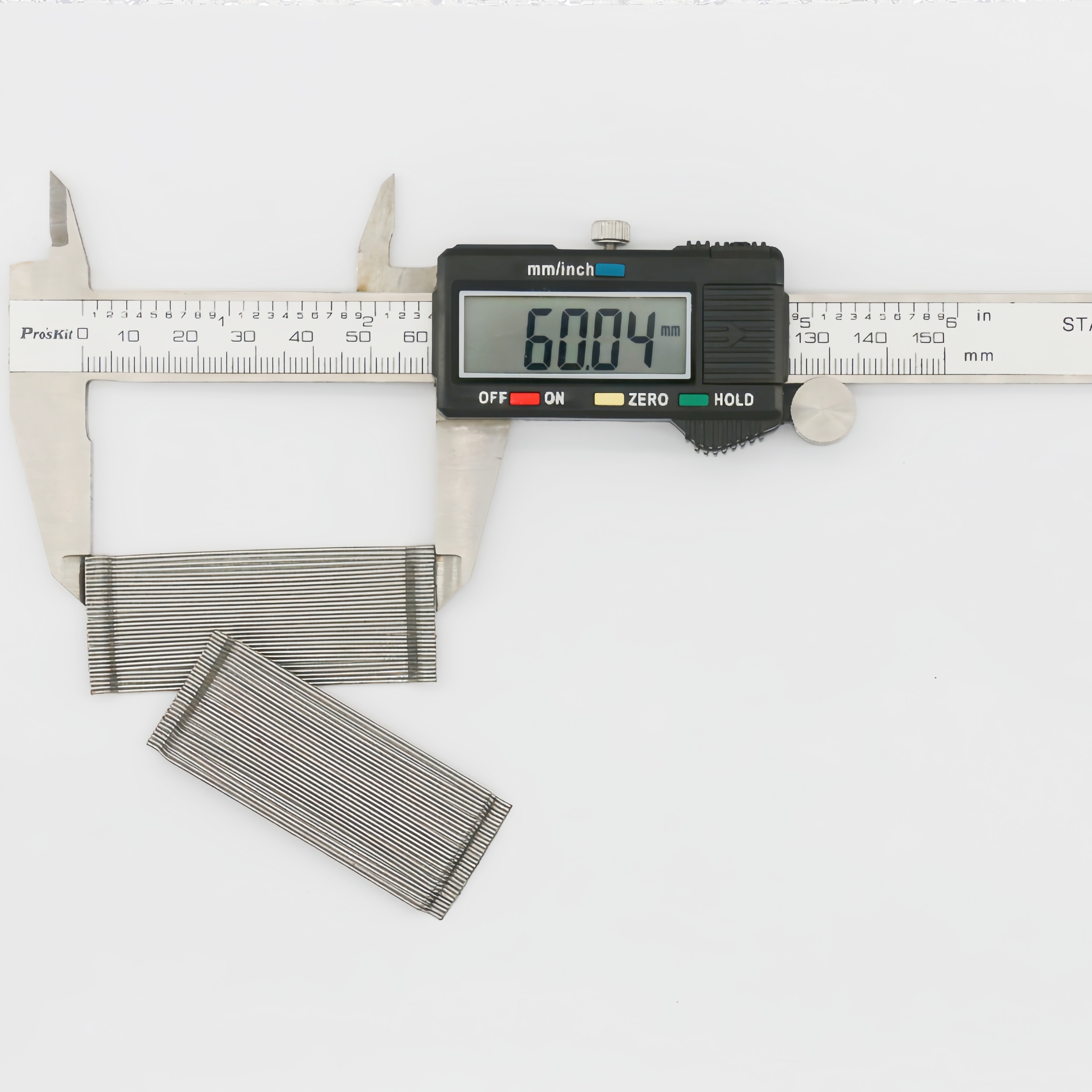
60 mm lengths are available in the range and are commonly specified for segment and heavy-duty floor mixes.
Mining and shotcrete
Shotcrete carries the highest dose in TingCo's published guidance, at 20–40 kg/m³, and it is applied through spraying equipment rather than placed in a mould. At that dose, feed consistency matters more than bag convenience, and the risk of dumping too much fiber at once rises. Loose fiber fed at a controlled rate, or glued bundles charged in sequence, both work; the deciding factor is whether the crew can hold a steady feed at the spraying machine.
Acceptance Checks That Apply to Both Forms
Supply form is a handling choice, so it should not change the acceptance basis. The same checks apply whichever form arrives on site, and they should be written into the purchase order before the first delivery.
Product conformity. TingCo's steel fibers are CE certified in accordance with EN 14889-1, comply with ASTM A820 and ISO 13270, and the factory is ISO 9001 quality certified. ASTM A820/A820M is the standard specification covering steel fibers for fiber-reinforced concrete, and EN 14889-1 defines the definitions, specifications and conformity requirements for steel fibers used in concrete in the European Union. Ask for the certificate that matches the standard named in your specification, not a generic quality statement.
Factory inspection. TingCo operates its own steel fiber reinforced concrete testing laboratory, where each product line undergoes beam bending, compression and toughness tests, and every shipment is inspected before leaving the factory for specifications, quantity and packaging. A buyer can request the inspection record for the delivered batch and check that the model, diameter, length and quantity match the order.
Hardened-concrete performance. The acceptance basis for the concrete itself is the residual flexural strength and toughness of the hardened mix, not the tensile strength printed on the fiber datasheet. EN 14651 uses a three-point bending beam test; ASTM C1609 uses a beam test; ASTM C1550 uses a panel test. These are the core basis for engineering design and acceptance, and the specimen preparation requirements should be followed exactly, because a small deviation in specimen handling changes the reported toughness.

CE certification under EN 14889-1 is part of the product conformity evidence a buyer should request with the order.
Limits of the Comparison
Three boundaries are worth stating plainly. First, supply form does not correct a mix design. If the dose is wrong, the water content is high or the mixing time is short, neither loose nor glued fiber will deliver the specified residual strength, and the trial batch will show it.
Second, supply form does not change the corrosion behavior of the fiber itself. Steel fiber reinforcement is chosen for its mechanical contribution; where a project needs corrosion-free reinforcement, that is a fiber-family decision rather than a loose-versus-glued decision.
Third, the dispensing convenience of glued fiber depends on packaging. If the outer packaging is not water-soluble, the bundles still have to be opened and spread evenly in batches, and much of the handling advantage disappears. Buyers should confirm the packaging type in writing rather than assuming it from the word "glued".
Finally, the cost figures cited in this article — 30%–40% lower cost and 50% less construction time — describe steel-fiber-reinforced flooring against wire mesh reinforced flooring. They are not a cost comparison between loose and glued supply, and applying them to that decision would overstate the case.
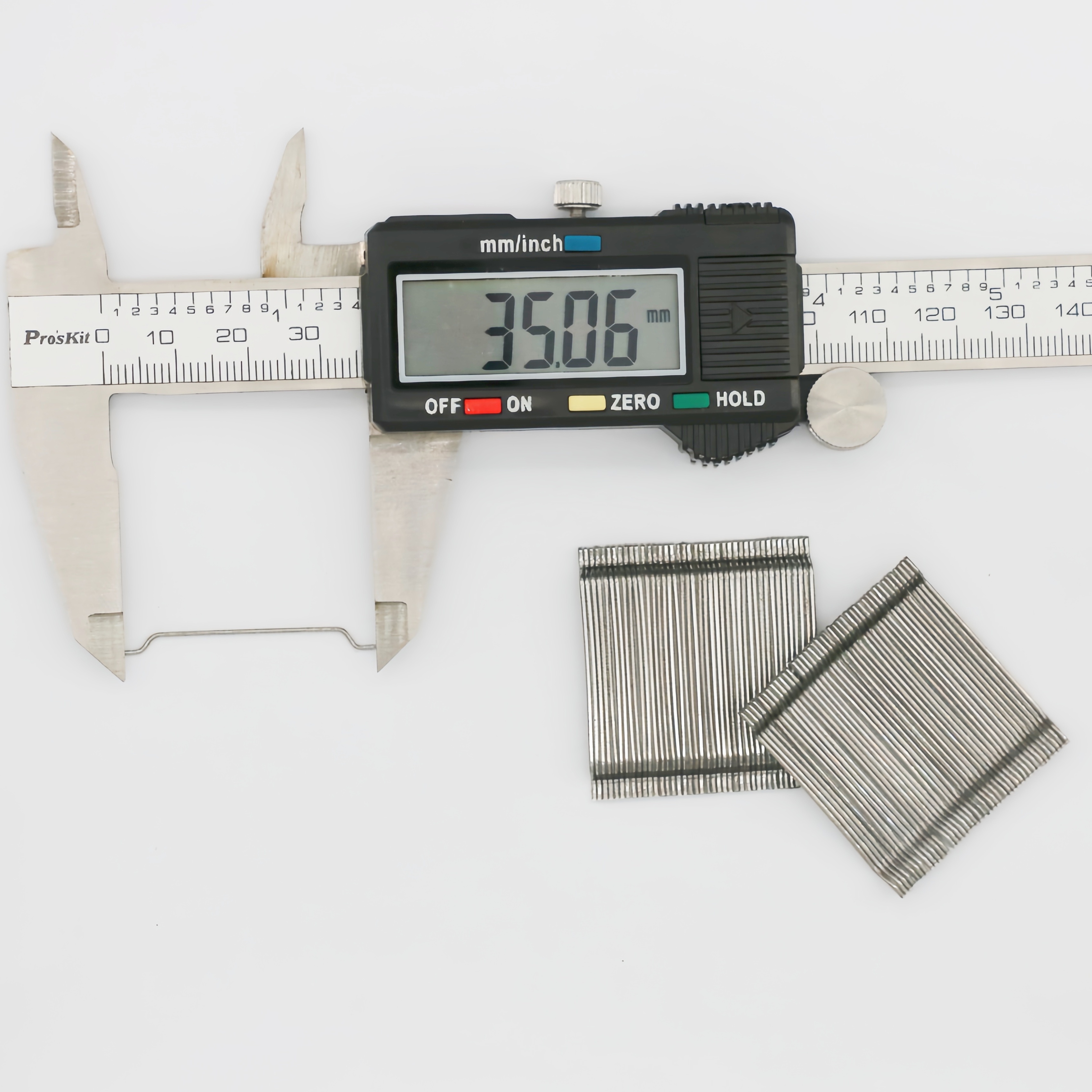
Bundles reduce loose filament handling before mixing, but the 30–60 second mixing extension still applies.
Frequently Asked Questions
Which standard governs acceptance testing of steel fiber concrete?
Acceptance is based on the hardened concrete, using EN 14651 (three-point bending beam test), ASTM C1609 (beam test) or ASTM C1550 (panel test) to verify residual flexural strength and toughness index. These tests are the core basis for engineering design and acceptance. They sit alongside product standards: ASTM A820/A820M specifies requirements for steel fibers for fiber-reinforced concrete, and EN 14889-1 defines specifications and conformity for steel fibers used in concrete in the European Union. The fiber datasheet tensile value is not a substitute for a hardened-concrete toughness result.
Can loose and glued fiber be used in the same mix design?
In most cases the same mix design can be run with either supply form, because the fiber specification — diameter, length and tensile grade — stays the same and only the delivery form changes. The practical constraint is the plant, not the mix: a weigh-hopper plant handles loose fiber with less labor, while a plant charging by bag handles glued bundles with less labor. Confirm the dose, the mixing time extension of 30–60 seconds and the superplasticizer response in a trial batch before switching an approved mix from one form to the other.
How does supply form affect the cost per cubic meter of concrete?
Supply form does not change the theoretical fiber mass required at a given dosage, so the material quantity per cubic meter is set by the dose, not by whether the fiber is loose or glued. What changes is the labor and time around the dose: weighing and spreading for loose fiber, bag handling and placement for glued fiber, and the risk of rejected batches if dispersion fails. A fair comparison therefore prices the fiber, the feed labor and the trial batch together, rather than comparing the fiber price alone.
How should a buyer trial loose and glued samples before ordering?
Request both forms at the same model and specification, then run each through the actual mixer at the production dose, using the same mixing time extension of 30–60 seconds. Record the slump before and after any superplasticizer adjustment, watch the discharge for balling, and cast specimens for EN 14651 or ASTM C1609 testing. Compare the hardened results, not the appearance of the fresh mix. A trial conducted in a laboratory mixer does not predict behavior in a production drum, so the plant trial is the one that counts.
What should a purchase order specify for either supply form?
Name the model exactly — for example TC-07560-HNG, TC-07560-HHG, TC-05535-HNG or TC-07535-HNL — and state the diameter, cut length, tensile strength, supply form, packaging type, quantity and delivery schedule confirmed on the datasheet. Add the batch inspection record, the conformity certificate for the standard named in your specification, and the test method to be used for acceptance. If you want to evaluate this on your own mix, send your mix design and dosage to the technical team at Tianjin TingCo Tech Co., Ltd. and ask for matched loose and glued samples from the same specification, so the only variable in your trial is the supply form.
Conclusion
The loose-versus-glued question resolves quickly once it is asked at the mixer rather than at the catalog. Loose fiber gives a plant dosing freedom and suits weigh-hopper charging, variable pours and site-batched floors. Glued bundles give a plant a faster, cleaner feed step and suit fixed-cycle precast work such as tunnel segments, provided the packaging is water-soluble and the mixing time is still extended by 30–60 seconds.
In both cases the specification stays the same: 0.55–0.90 mm diameter, 35–60 mm length, 1,200–2,500 MPa tensile strength, with 60 mm lengths available. The decision lives in the batching routine, the crew and the trial batch — and the trial is where it should be settled. Confirm each model's datasheet values, run both forms through your own drum, and let the EN 14651 or ASTM C1609 result decide.
Next step: the TingCo company and project brochure covers the full steel fiber range, factory capability and application references, and it is available for public download: download the TINGCO brochure (PDF).
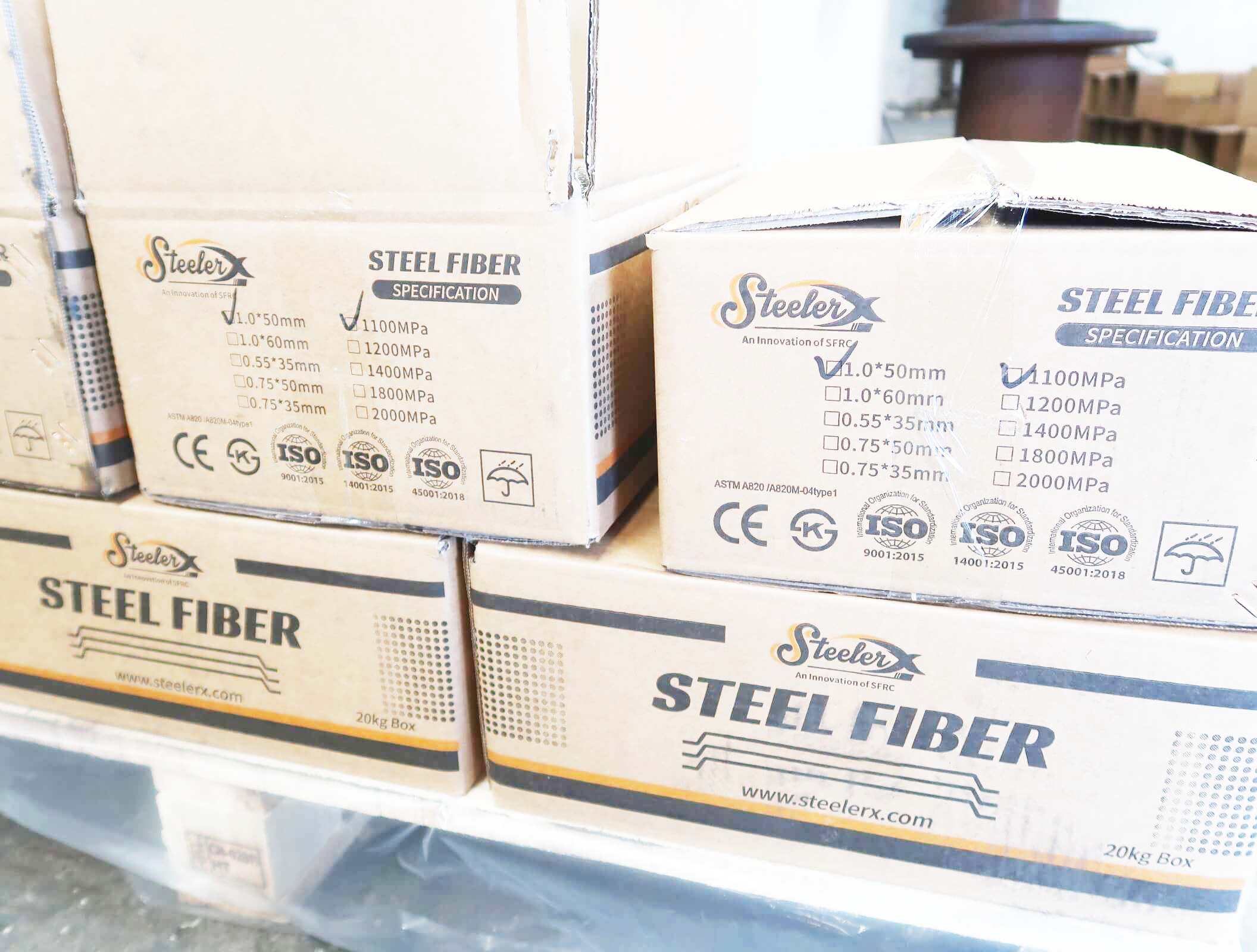
Sample cartons can be prepared in matched loose and glued specifications for plant trials.
Have Questions or Need More Details?
Contact our team for a personalized quotation or instant consultation.
Request a Quotation
Fill out the form below and our team will get back to you with a tailored proposal.
WhatsApp Direct Chat
Prefer to chat in real-time? Message us on WhatsApp for instant assistance & quick answers.
- Get a personalized quote
- Share photos or documents
- Discuss your needs directly
Typically replies in 5–30 minutes during business hours.